The Tools of the Trade: A Silversmith's Kit
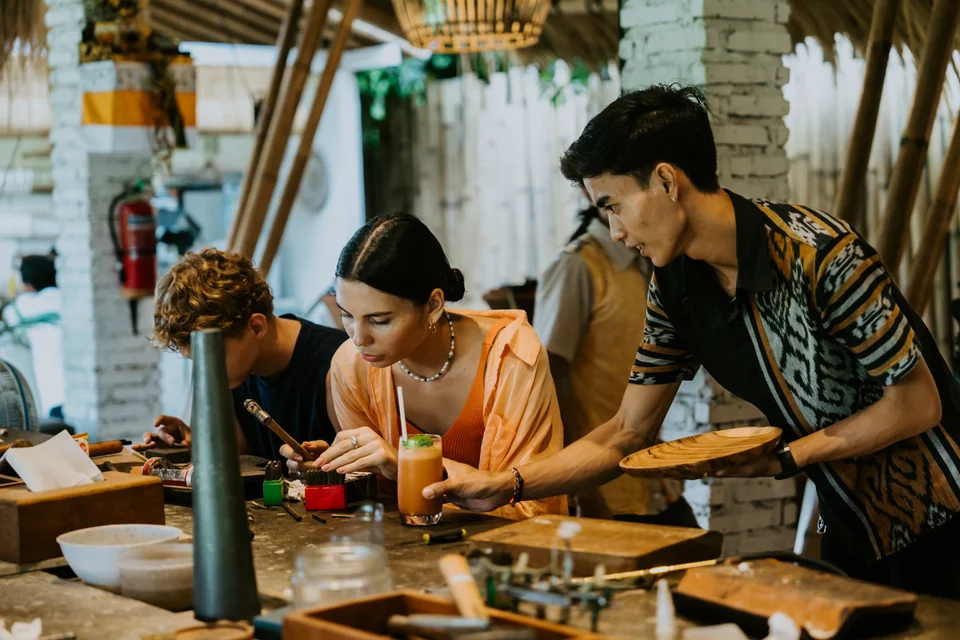
Walking into the Alas Arum Silver & Gold Workshop can feel a bit like walking into a laboratory or a medieval smithy. The benches are lined with strange-looking instruments that haven't changed much in hundreds of years.
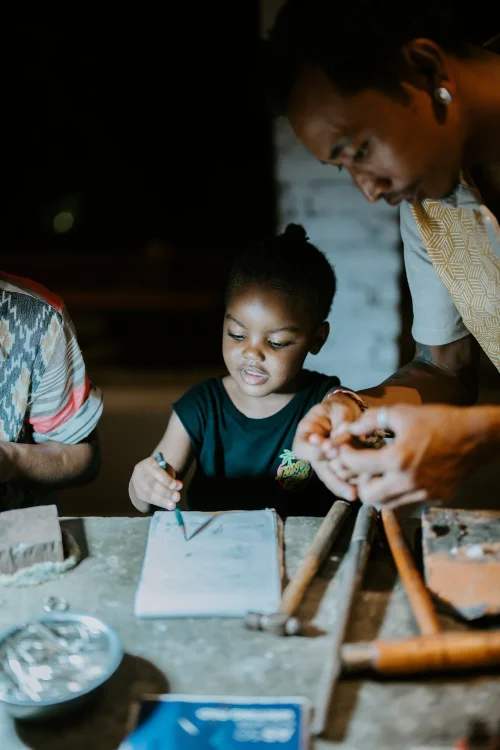
Don't be intimidated! Each tool has a specific purpose, and by the end of your 3-hour class, they will feel like extensions of your hands. Here is your introduction to the "Big Five" tools of the silversmith.
1. The Saw Frame (Gergaji)
What it is: A U-shaped metal frame holding a hair-thin blade with tiny teeth.
What it does: Cuts the metal. It is the most important tool for precision.
The Challenge: The blade is delicate. If you push too hard or twist it, it snaps! The secret is to let the saw do the work and keep your arm relaxed. It’s like playing a violin.
2. The Gas Torch (Blender)
What it is: A handheld nozzle connected to a gas canister.
What it does: Provides the fire. You use it for two things: Annealing (softening the metal) and Soldering (gluing metal together).
The Challenge: Controlling the heat. Too little, and the solder won't flow. Too much, and you melt your ring into a puddle. Our instructors will help you find the "sweet spot."
3. The Hammer (Palu)
What it is: We use several types, including steel hammers and rawhide mallets.
What it does: Shapes and textures. A rawhide mallet bends the ring without leaving marks. A steel texturing hammer leaves cool patterns (dimples, lines) on the surface.
The Challenge: Aim. Hitting your thumb is a rite of passage, but we try to avoid it!
4. The Files (Kikir)
What it is: Steel bars with rough surfaces.
What it does: Removes excess metal and smooths edges. After soldering, your joint might be messy. Filing makes it seamless.
The Challenge: Patience. Filing is a slow, rhythmic process. It is the step that separates the amateurs from the pros.
5. The Rolling Mill (Gilingan)
What it is: A heavy machine with two steel rollers and a crank handle.
What it does: It flattens thick ingots into thin sheets or wires. It uses immense pressure.
The Challenge: Muscle power! Cranking the handle requires a bit of effort, especially with gold.
Safety First
While these tools are sharp and hot, they are safe when used correctly. We provide:
- Safety glasses (for sawing and polishing).
- Aprons (to protect your clothes from dust).
- Constant supervision.
There is a primal satisfaction in using these manual tools. In a digital world of touchscreens, there is nothing quite like the feeling of striking silver with a hammer.
Our Workshops