Brass in Bali: A Golden Metal with a Long History
When people think about Balinese jewelry, silver is usually the first metal that comes to mind. Villages such as Celuk have earned an international reputation for silver craftsmanship, attracting visitors from around the world. Yet long before Bali became famous for silver, another metal had an important place in daily life, religious ceremonies, and personal adornment: brass.
With its warm golden color, brass has been used across Indonesia for centuries. It decorated temples, accompanied ceremonies, formed household objects, and became part of traditional jewelry worn by kings, dancers, priests, and villagers alike. Although brass is often valued for its beauty today, its history in Bali tells a much deeper story.
What Is Brass?
Brass is an alloy made primarily from copper and zinc. Unlike gold, it is affordable and widely available, yet it carries a rich golden color that gives it an elegant appearance.
The amount of copper and zinc can be adjusted depending on the purpose. Higher copper content creates a warmer reddish tone, while more zinc produces a brighter golden color. Brass is also relatively easy to shape, engrave, hammer, polish, and cast, making it an excellent material for traditional metalworkers.
Because it is durable and resistant to corrosion in tropical climates, brass has remained popular throughout Southeast Asia for hundreds of years.
How Did Brass Become Part of Indonesian Culture?
Metalworking arrived in the Indonesian archipelago more than two thousand years ago through trade with India, China, and mainland Southeast Asia. Copper and bronze appeared first, followed later by brass as zinc became more accessible.
By the time Hindu and Buddhist kingdoms flourished across Java and Bali, skilled metalworkers were already producing ceremonial objects, statues, weapons, musical instruments, and jewelry.
The Majapahit Empire, which reached its height during the 13th to 15th centuries, played a major role in spreading advanced metalworking techniques throughout the region. When many Majapahit nobles, artists, priests, and craftsmen moved to Bali, they brought their knowledge with them. Much of Bali’s artistic tradition today traces its roots to this period.
The methods of casting, hammering, engraving, and polishing brass that survive today are direct descendants of these early techniques.
Why Brass Instead of Gold?
Gold has always been highly valued in Bali, but it was also rare and expensive.
Brass offered several distinct advantages:
- Golden Appearance: It had a beautiful golden look similar to high-karat gold.
- Affordability: It was much more affordable than gold.
- Accessibility: It was easier to obtain for artisans and everyday families.
- Durability: It was strong enough for everyday wear and ceremonial use.
- Reusability: It could be repaired, remelted, and reshaped many times.
For many families, brass provided the appearance of luxury while remaining practical. It allowed beautiful jewelry and ceremonial objects to become accessible to far more people than gold ever could.
Even today, many ceremonial ornaments used in temples are made from brass rather than solid gold.
Brass in Balinese Ceremonies
Brass is deeply connected to Balinese Hindu traditions. Throughout Bali, brass is used to create many ceremonial objects found inside temples and family shrines.
These include:
- Offering bowls
- Holy water vessels
- Temple bells
- Incense holders
- Oil lamps
- Ritual mirrors
- Decorative temple ornaments
- Containers for sacred offerings
Many priests also use brass ritual tools during ceremonies because the material is durable, beautiful, and develops a natural patina over time.
During temple festivals, brass objects often shine beside flowers, woven palm leaf offerings, and colorful textiles, becoming part of Bali’s distinctive ceremonial atmosphere.
Traditional Brass Jewelry
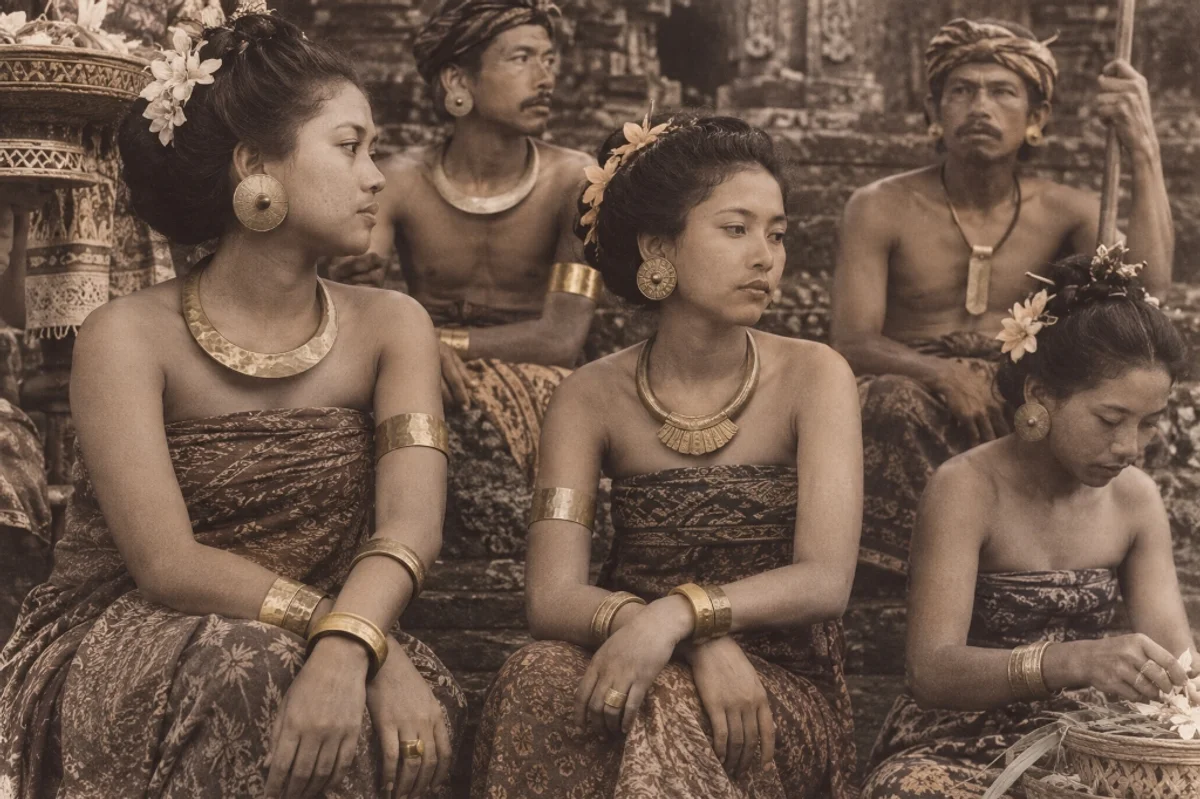
Although silver later became more common for jewelry production, brass has long been worn throughout Bali.
Traditional pieces included:
- Wide bracelets and bangles
- Thick arm cuffs
- Neck collars
- Earrings and ear plugs
- Hair ornaments
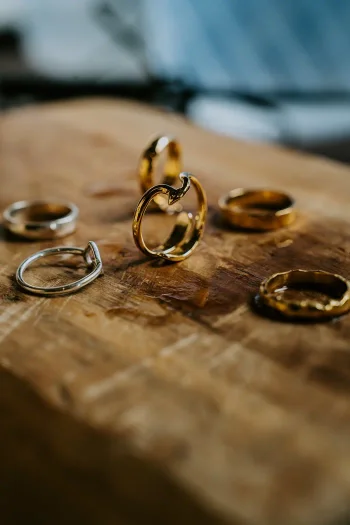
- Finger rings
- Belt decorations
- Intricate pendants
These ornaments appeared during temple ceremonies, weddings, dances, and important family celebrations.
Balinese dancers continue to wear elaborate brass accessories today, often combined with gold-colored crowns and decorative costume pieces inspired by older royal designs.
Many historical pieces feature floral patterns, mythical creatures, lotus flowers, dragons, birds, and geometric carvings that reflect Balinese spiritual beliefs and nature.
Brass Beyond Jewelry
Brass has never been limited to personal decoration. Across Bali and Indonesia it has been used to make:
- Gamelan musical instruments
- Door handles and architectural hardware
- Locks and keys
- Temple decorations
- Traditional mirrors
- Kitchen utensils
- Candle holders
- Water containers
- Small statues and sculptures
- Household decorations
The famous sound of a Balinese gamelan orchestra comes largely from bronze, but brass is also used for certain instruments and decorative components because of its strength and attractive acoustic finish.
The Craft of Working with Brass
Traditional brass jewelry begins much like silver jewelry.
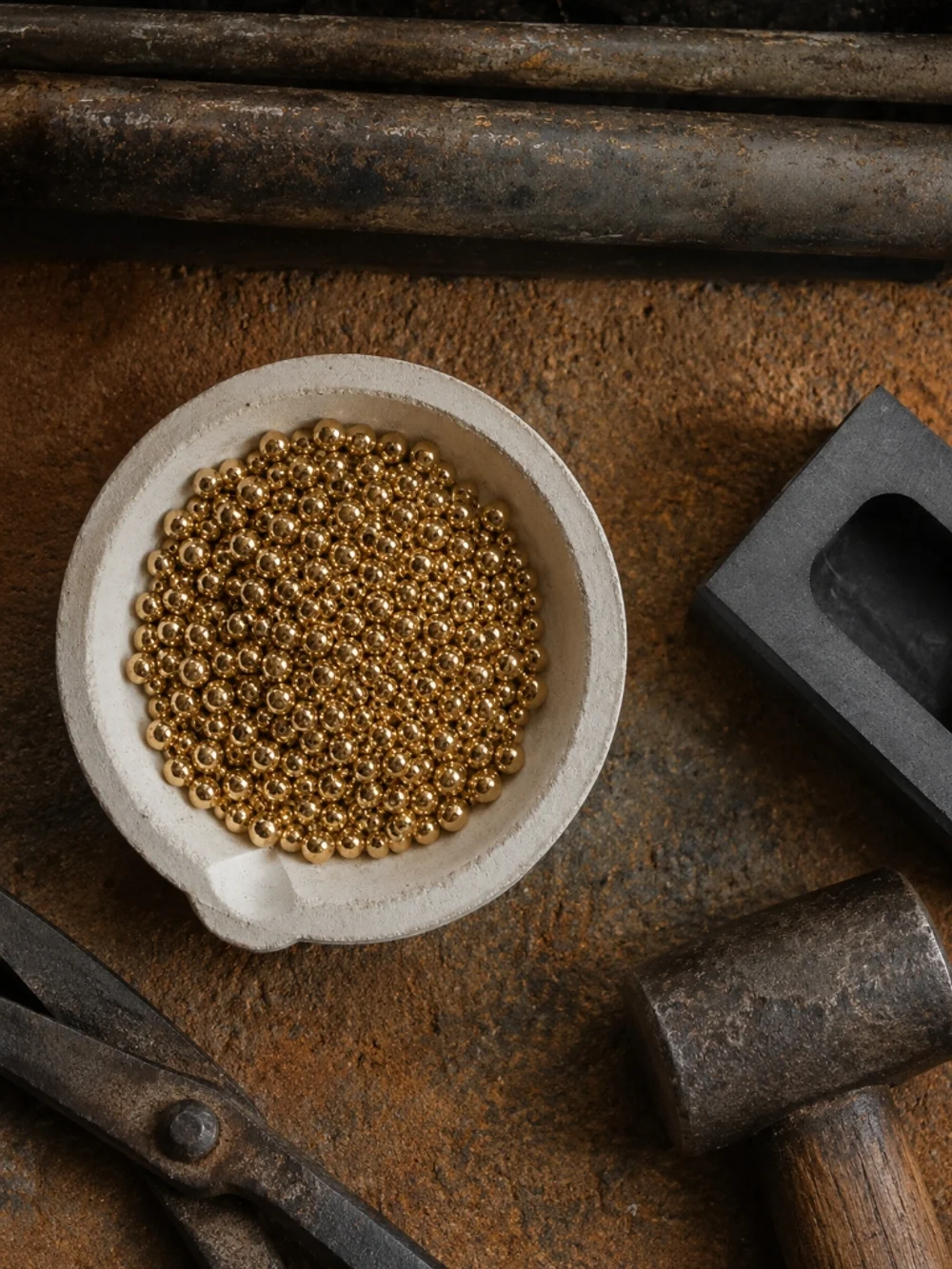
The metal may be melted into ingots or formed into granules before being rolled into sheet or drawn into wire. Craftsmen then saw, file, hammer, texture, bend, solder, polish, and finish each piece by hand.
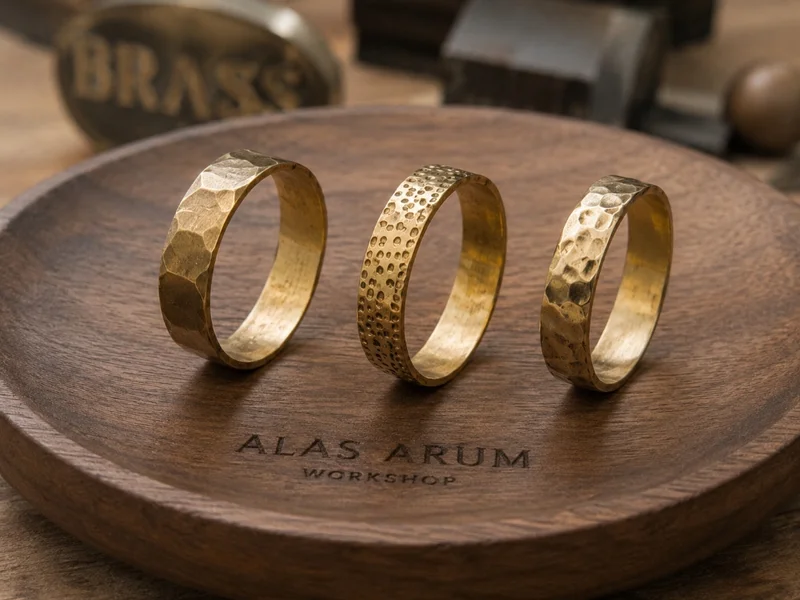
Hammering is one of the oldest decorative techniques in Balinese metalworking.
Different hammers create different surface textures:
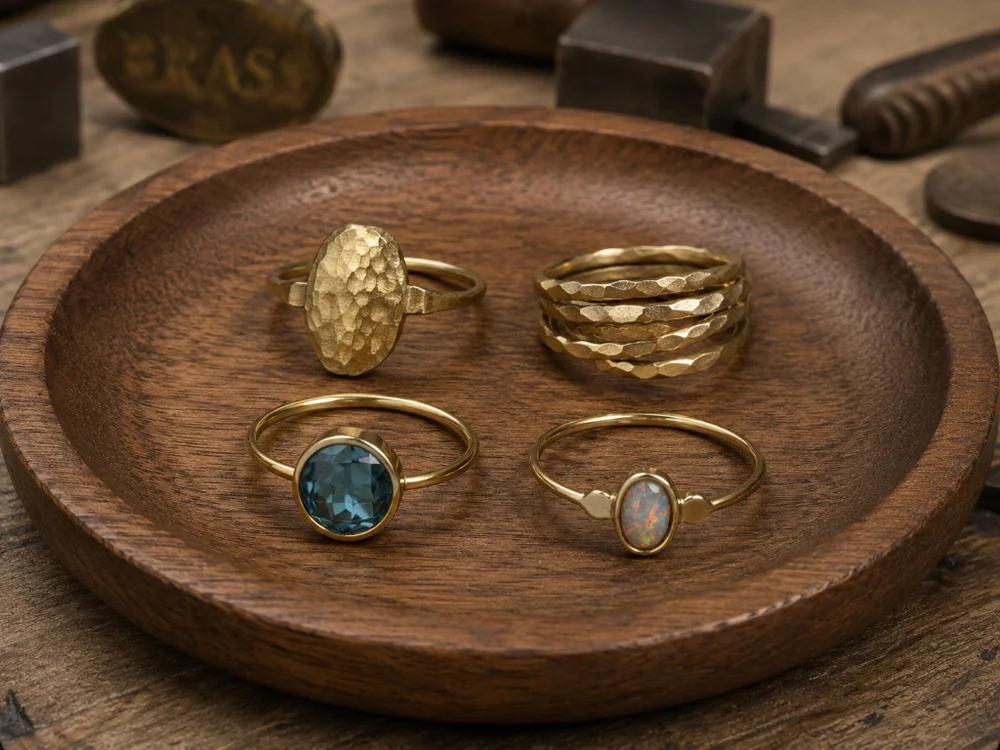
- Faceted finish: Light-reflecting geometric facets
- Pebbled finish: Subtly dimpled surface
- Speckled finish: Fine dotted hammering
- Matte finish: Soft satin sheen
- Polished finish: High golden mirror luster
These textures catch the light differently, giving each handmade piece its own unique character. Unlike factory-made jewelry, no two hammered brass pieces are ever exactly the same.
Brass Today in Bali
Modern Bali is famous for silversmithing villages such as Celuk, where thousands of artisans continue producing handcrafted jewelry. At the same time, brass has experienced a major renewed interest among artists, designers, and travelers.
Its warm golden color fits beautifully with Bali’s natural materials including bamboo, teak, volcanic stone, linen, and woven rattan.
Many visitors appreciate brass because it combines the appearance of gold with a more accessible price. It also develops a natural patina over time, giving every piece a unique character. Some people enjoy this aged finish, while others prefer to polish their jewelry to restore its bright golden shine.
As handmade craftsmanship becomes increasingly valued, brass has found a new audience among people looking for authentic, artisan-made jewelry.
Experience the Tradition Yourself
Creating jewelry from brass is more than simply making an accessory. It is an opportunity to experience one of the traditional materials that has shaped Balinese craftsmanship for centuries.
From ancient temple ornaments and ceremonial vessels to handcrafted rings and pendants, brass has always held a place in Bali’s artistic heritage. Its golden color, durability, and versatility have made it a favorite among generations of craftsmen.
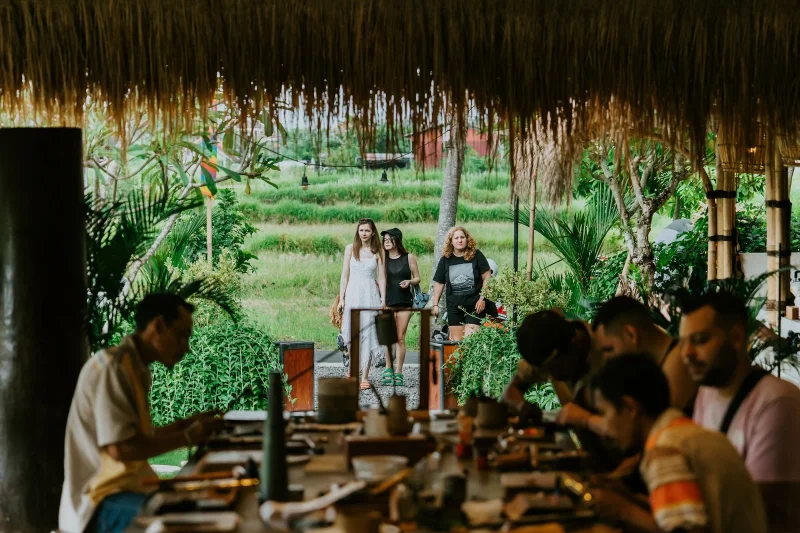
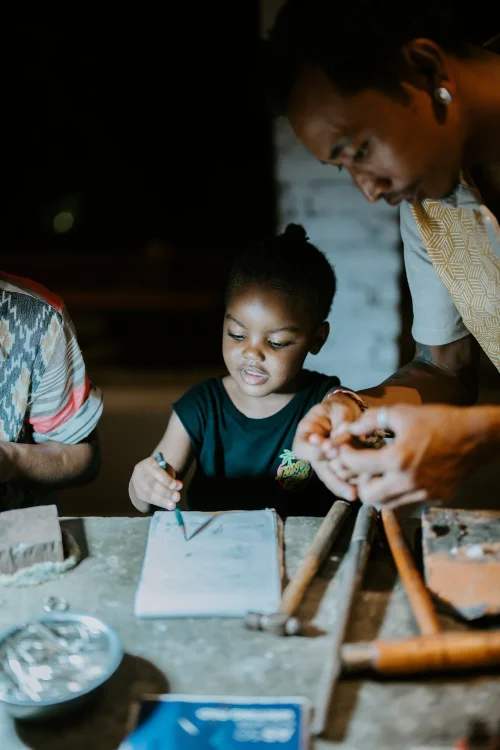
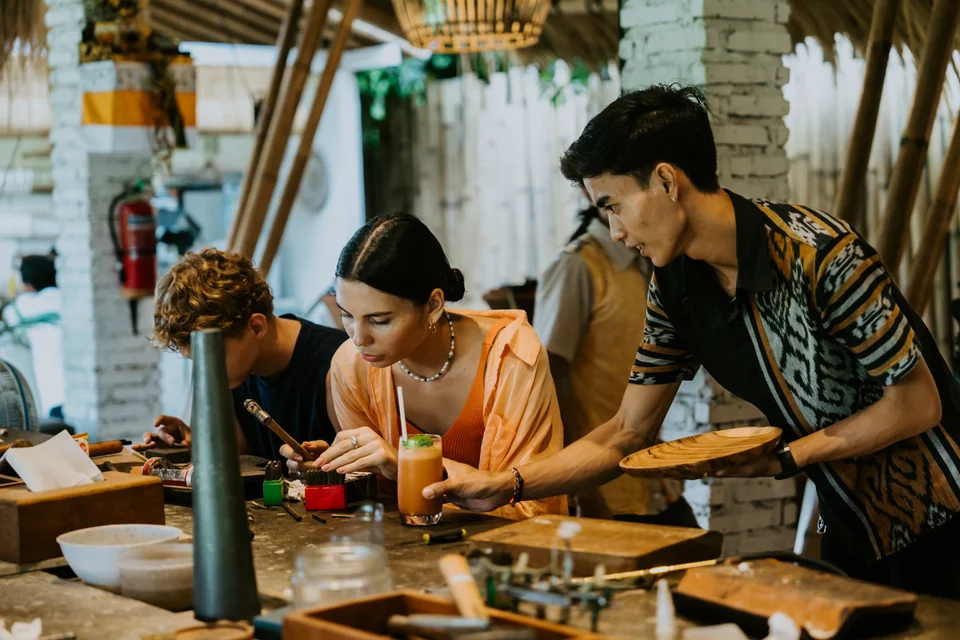
Today, visitors can continue that tradition by shaping, hammering, and polishing brass using many of the same hand tools that Balinese artisans have used for decades. Every hammer mark tells part of the story, transforming a simple piece of metal into something personal.
Whether you create a ring, a pendant, or a pair of earrings, your finished piece reflects a craft that connects history, culture, and skilled hands. It is more than jewelry—it is a small part of Bali’s long tradition of metalworking, carried forward into the present.
Join Our Traditional Balinese Brass Workshop
Want to craft your own custom brass ring, pendant, or earrings under the guidance of local Balinese master artisans in Ubud? Includes FREE gold plating for your finished piece!
Explore the Brass Class (IDR 500.000) →Our Workshops